
How Hayward People Searches Take Shape
Begin with the fact that is least likely to belong to someone else. A full name may work in a court or deed index. An old Hayward address is often stronger because the Alameda County Assessor can return the parcel number, which can then lead to recorded deeds and tax records. A business name can point to the city license search or California business filings. Family history may call for a death or marriage record, a probate case, or a local school directory.
Use this starter path to keep a Hayward search focused:
- Write down the full name, known name variants, approximate dates, and every Hayward or nearby community name tied to the person.
- For a modern address, search the Alameda County property system and save the parcel number before opening deed or tax records.
- For a name, check the correct Alameda court portal and the recorder index, then compare dates and other parties before drawing a conclusion.
- For family history, use certified or informational vital-record channels, probate files, directories, and the Hayward Area Historical Society.
- If a portal ends too soon, move to a public terminal, mail request, microfilm index, city records request, or archive reference desk.
A record hit is a lead, not proof by itself. Two people may share a name. Confirm a result through a second fact such as an address, parcel, filing date, relative, or business. Note: Save exact spellings and record numbers because they make later counter or mail requests much easier.
Hayward Record Offices Behind Search
Hayward is not the Alameda County seat. The main county recorder and assessor offices are in Oakland, while the local courthouse and City Hall serve important Hayward record trails. The Clerk-Recorder holds recorded deeds, liens, public marriages, fictitious business names, and county vital certificates. The Assessor connects street addresses with parcels. Hayward City Clerk records concern city government, permits, local boards, and city business.
Alameda County Clerk-Recorder
1106 Madison Street
Oakland, CA 94607
(510) 272-6362
These offices do not share one master search. Choose the custodian by the kind of event or filing involved. The deeper rules for copies, fees, and agency requests belong with the Hayward public records search.
Alameda Records Index for Hayward
The recorded-document trail is central to many Hayward searches. Alameda County says its real property records reach back to 1853, but the electronic index covers 1969 to the present. The index is organized around parties named on documents. In deed language, the grantor gives or transfers an interest and the grantee receives it. Liens, releases, reconveyances, and other filings can add more names and dates to the chain.
The Alameda County official records page shows where modern web access ends and older research begins.
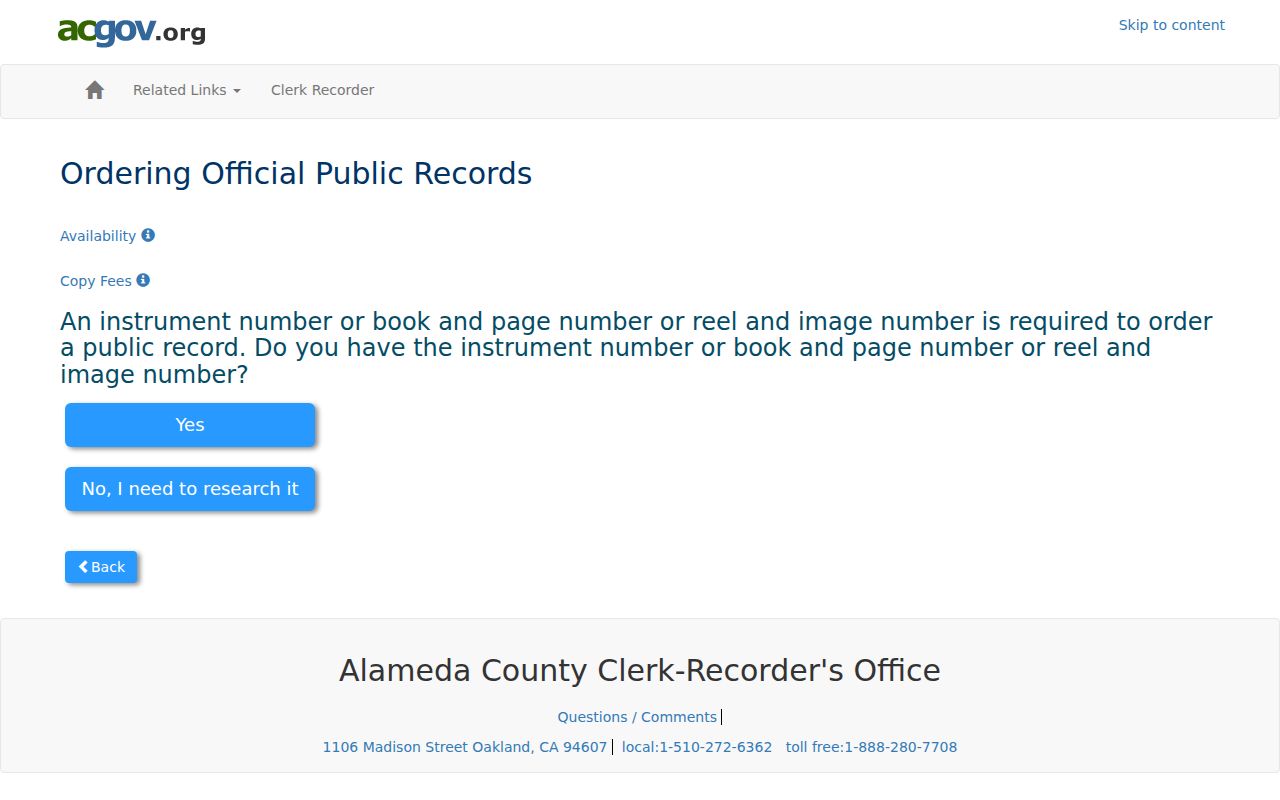
The page confirms that a Hayward deed search may require both the computer index and an in-person microfilm visit. Online and mail copy orders are also available. The office advises waiting two weeks after filing before ordering a copy, and mail payment cannot be made by credit card.
- Index
- A finding list that points to a recorded document; it is not always the document image.
- Grantor
- The party transferring or releasing an interest.
- Grantee
- The party receiving an interest or benefit in the filing.
- Certified copy
- An official copy authenticated by the records office for uses that require certification.
Finding Hayward Names Through Property
An address can be more useful than a common name. The Alameda County Assessor Property Search offers Parcel Number, Type Ahead Address, and Property Address modes. It does not show an owner-name option on the public landing screen, so a Hayward search should start with the street address or a known Assessor Parcel Number, also called an APN. The APN is the county's unique parcel identifier.
The official assessor search presents the three available ways to locate a parcel.
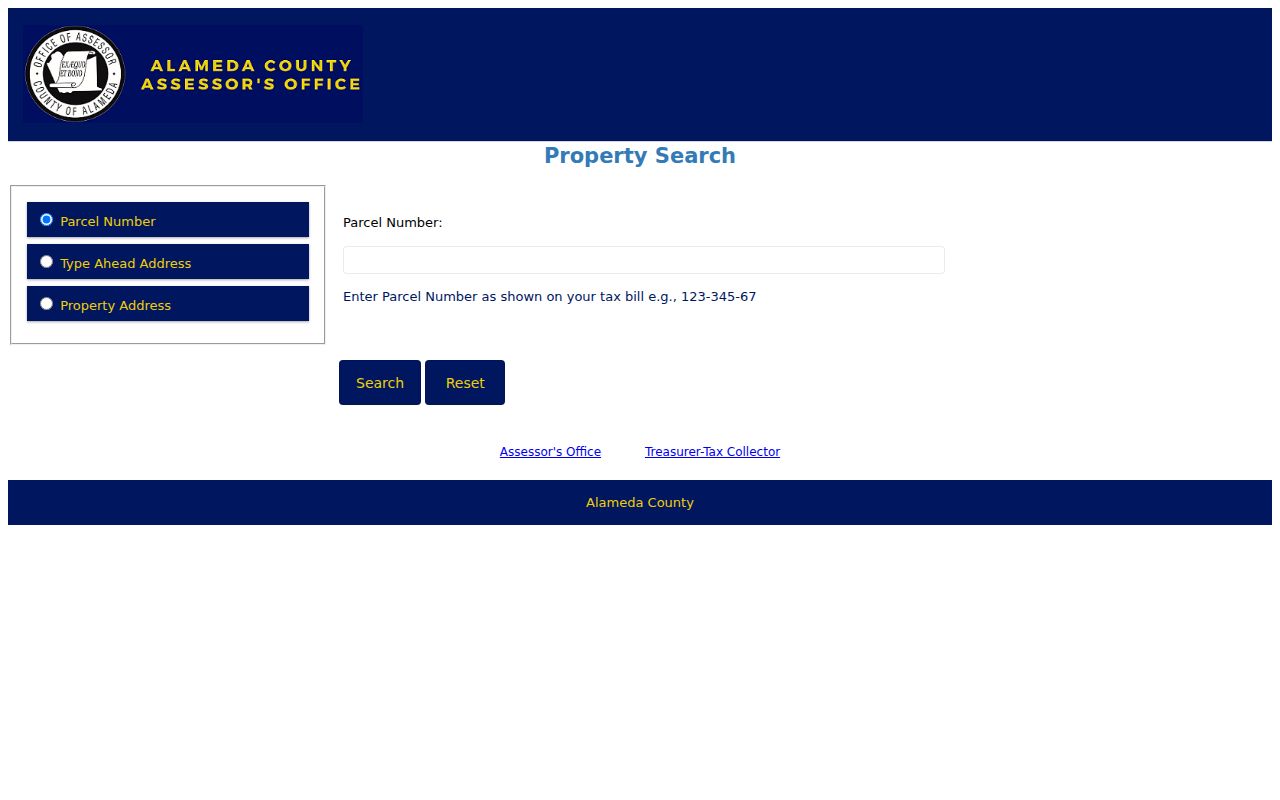
Once the parcel is found, carry the APN and legal description into recorder and tax searches. That creates a useful sequence: Hayward address to parcel, parcel to current recorded party, and recorded party to earlier transfers. Keep the property location separate from any mailing address because the two can point to different places.
| Field label | Type | Required | Options or format |
|---|---|---|---|
| Search Criteria | Tab or radio control | Yes | Parcel Number, Type Ahead Address, or Property Address |
| Parcel Number | Text | Conditional | Example format shown: 123-345-67 |
| Type Ahead Address | Autocomplete text | Conditional | Suggests addresses as the user types |
| Property Address | Text | Conditional | Street-address search |
| Reset | Button | No | Clears the search |
Note: An assessment entry identifies a parcel trail, so compare it with recorder documents before treating it as a full ownership history.
Hayward Court Records Name Search
Hayward court research uses more than one system. Alameda eCourt covers civil, family, probate, mental health, and adoption case information, while Odyssey handles public criminal case information. eCourt offers a paid Name Search that returns matching case numbers and filing dates, with up to 1,500 cases displayed. Selecting a case can open its Register of Actions, the dated list of events filed in that matter. Odyssey Smart Search and hearing search are free but require registration, and public criminal documents are not available online.
The Alameda eCourt information screen describes its search modes, reports, and document access.
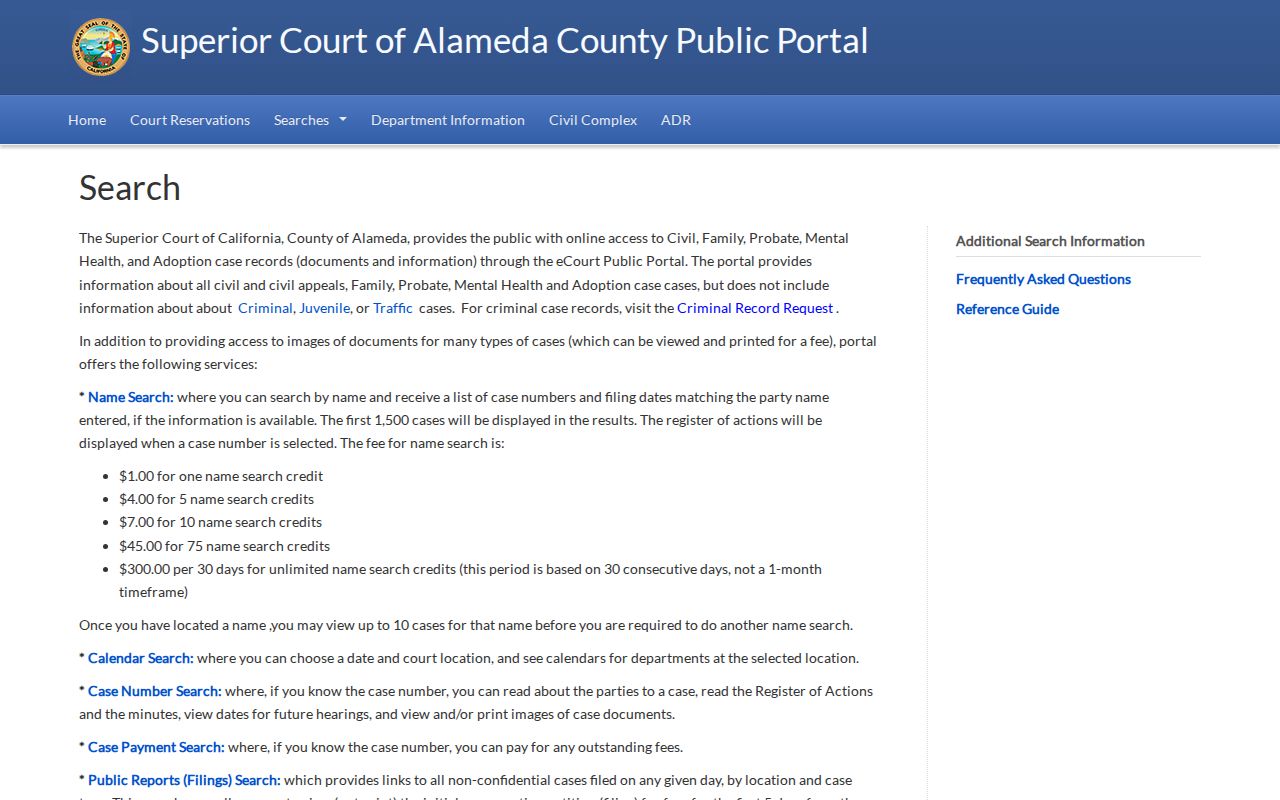
The image helps distinguish a name-credit search from a case-number lookup. Public reports can show non-confidential new filings, and eligible document downloads cost by the page. In-person research is free at public terminals, which matters when a paid name search is too broad or the web record lacks a document.
The Odyssey criminal portal is the separate route for criminal case information.
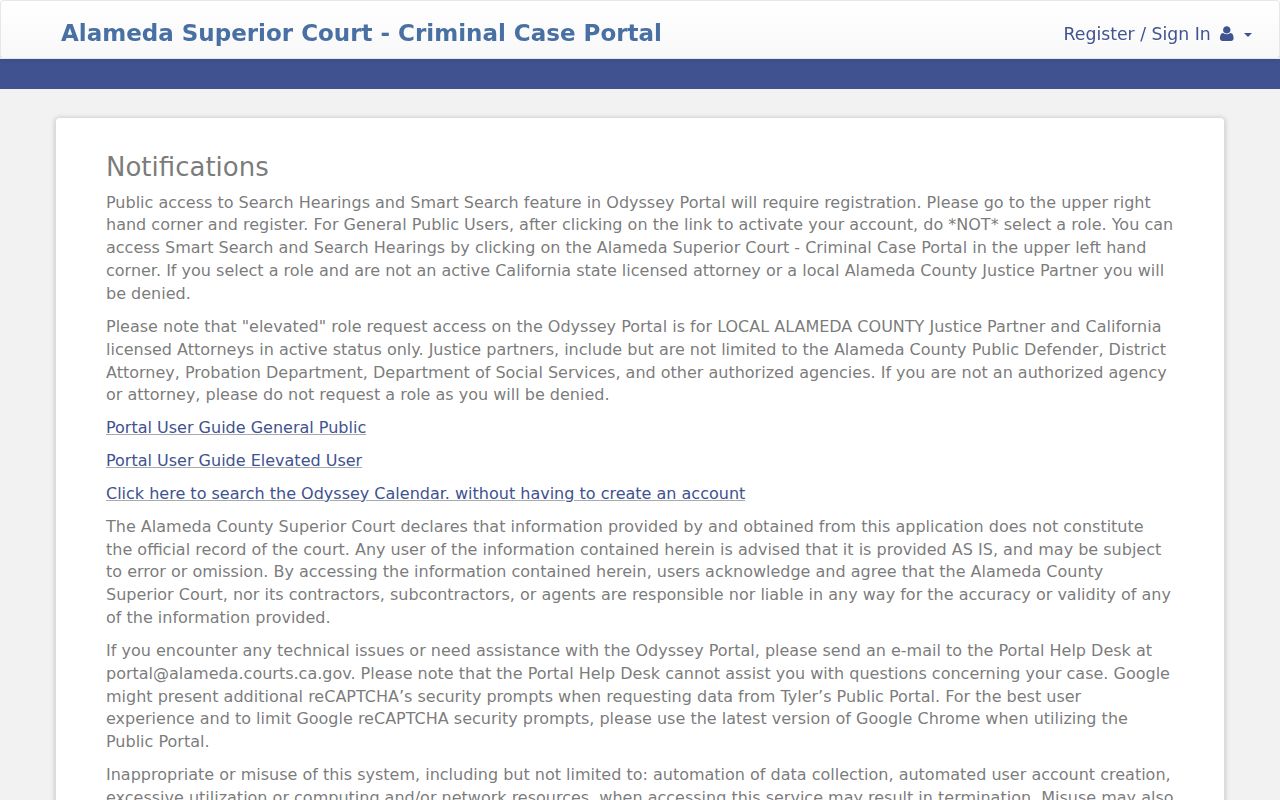
Odyssey covers online case information for matters with activity since 2005. Public kiosks can offer broader on-site access, and many in-person criminal records reach cases opened since 1974. Hayward Hall of Justice is at 24405 Amador Street, with civil, criminal, and family divisions reached through separate numbers.
| Hayward court route | Case scope | Online reach | Fallback |
|---|---|---|---|
| eCourt | Civil, family, probate, mental health, adoption | Paid name search; available case data and eligible images | Terminal or mail search |
| Odyssey | Criminal | Case information with activity since 2005 | Kiosk or Criminal Division |
| Hayward Hall of Justice | Local division records | Division dependent | Counter and public terminal |
Juvenile files require a petition, adoption records require a court order, and sealed or confidential matters do not appear like open cases.
Use Hayward records only for lawful personal research. Never use a record to stalk, threaten, harass, or defeat a confidentiality protection.
Hayward Vital Records Search Routes
Hayward does not issue birth, death, or marriage certificates. Alameda County Clerk-Recorder handles local events, and California Department of Public Health maintains statewide files from July 1905. California divides ordinary birth, death, and public marriage copies into authorized and informational forms. An authorized copy is limited to people named in state law. An informational copy is certified but marked as not valid to establish identity. Confidential marriage certificates are generally limited to the parties or a court order.
County prices are $36 for a birth certificate, $28 for a death certificate, and $21 for a marriage certificate. For events before statewide coverage, try the county, State Archives, church or cemetery records, and genealogy collections. Alameda marriage microfilm at the California State Archives spans 1854 through 1955. Divorce files follow a different trail: CDPH can issue a certificate of record, while the pleadings and judgment remain court records.
Note: Choose the copy type before ordering because an informational certificate cannot stand in for an authorized identity document.
Hayward City Records Beyond County
Some of the most local names never reach a county portal. Hayward City Clerk records can identify applicants, speakers, appointed officials, consultants, property owners, and groups in council or commission business. Laserfiche holds City Council minutes from 1950 forward, agenda reports from 2000, resolutions from 1975, ordinances from 1980, and Planning Commission minutes from 1990. Legistar covers legislative records from June 2013 forward. A strong search checks both archives because their date ranges and document sets differ.
The Hayward city records request page brings together the archive links, City Clerk contact, and GovQA request route.
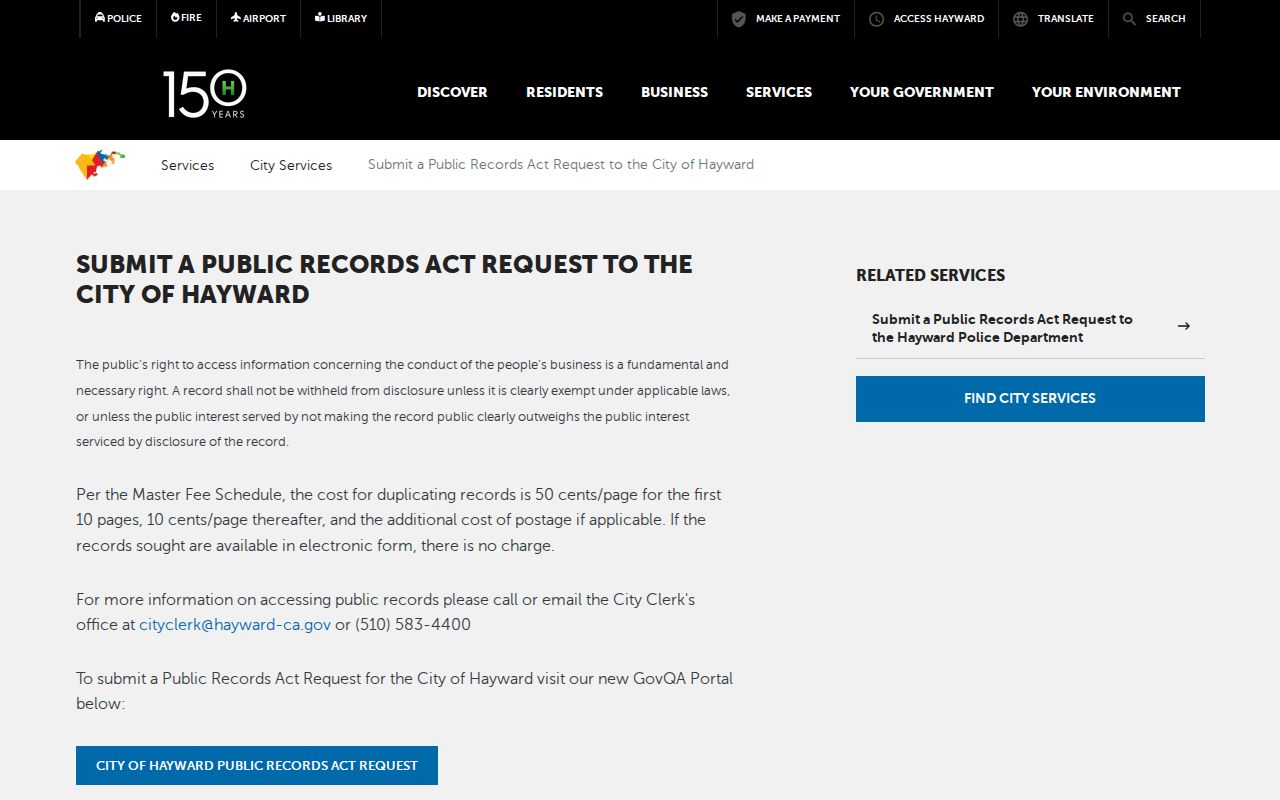
The city charges no fee for records already available electronically. Paper copies cost 50 cents per page for the first ten pages and 10 cents per page after that, plus postage when needed. A focused request should name the person, date range, address, board, project, or document type.
Permits add an address-based route. Hayward launched e-Permits in December 2022 for project review, building permits, code enforcement, and inspections. The Hayward permits index directs each project type to the right online or staff channel.
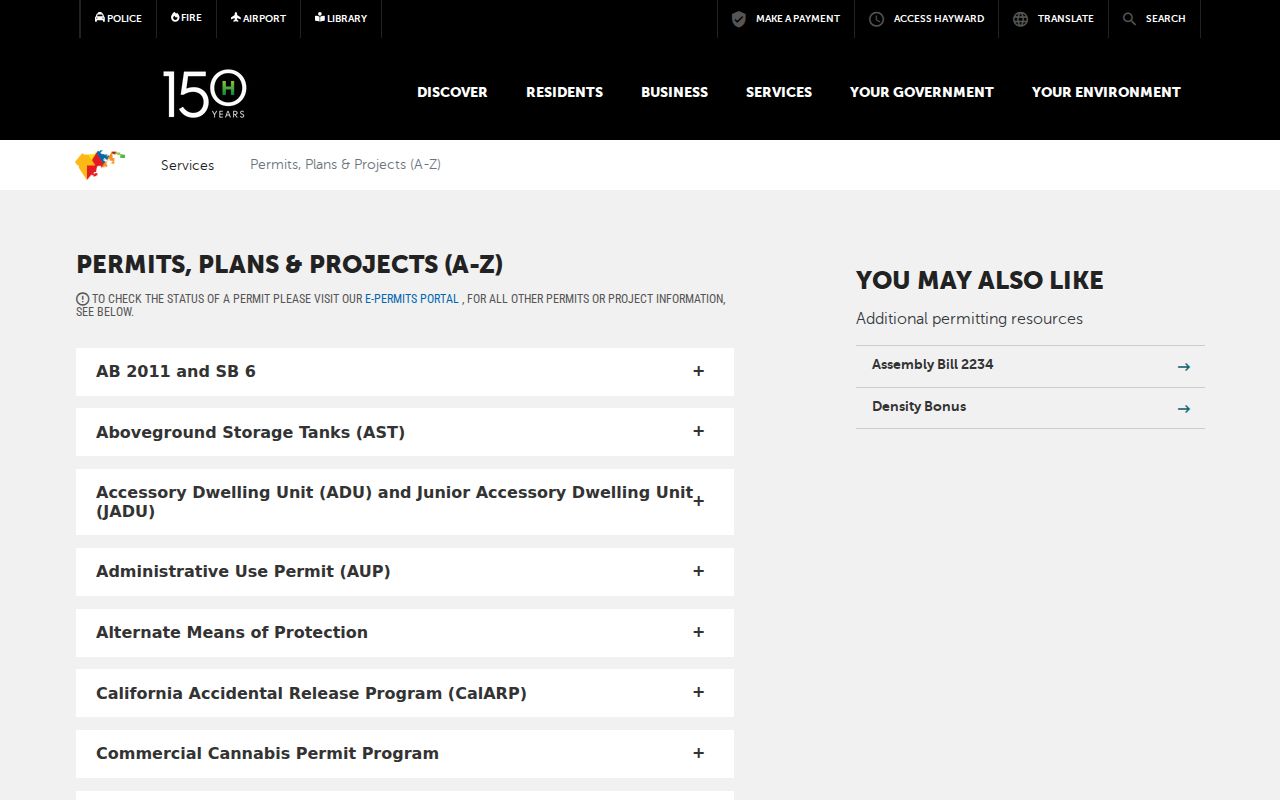
Permit records can connect a Hayward address with an applicant, contractor, project description, or status. When the portal does not expose an older file, the Permit Center or a city records request is the next step.
Hayward Business and License Search
A local business trail can connect a trade name, street address, license type, or state credential to a person or entity. Hayward's public license database accepts Business Name, Business Address, Business Type, Account Number, and State License Number. Its wide type list also lets a search start with a line of work when the exact name is not known. Results should then be checked against California Secretary of State business filings or the relevant state licensing board.
The Hayward business license search displays its search choices and category control.
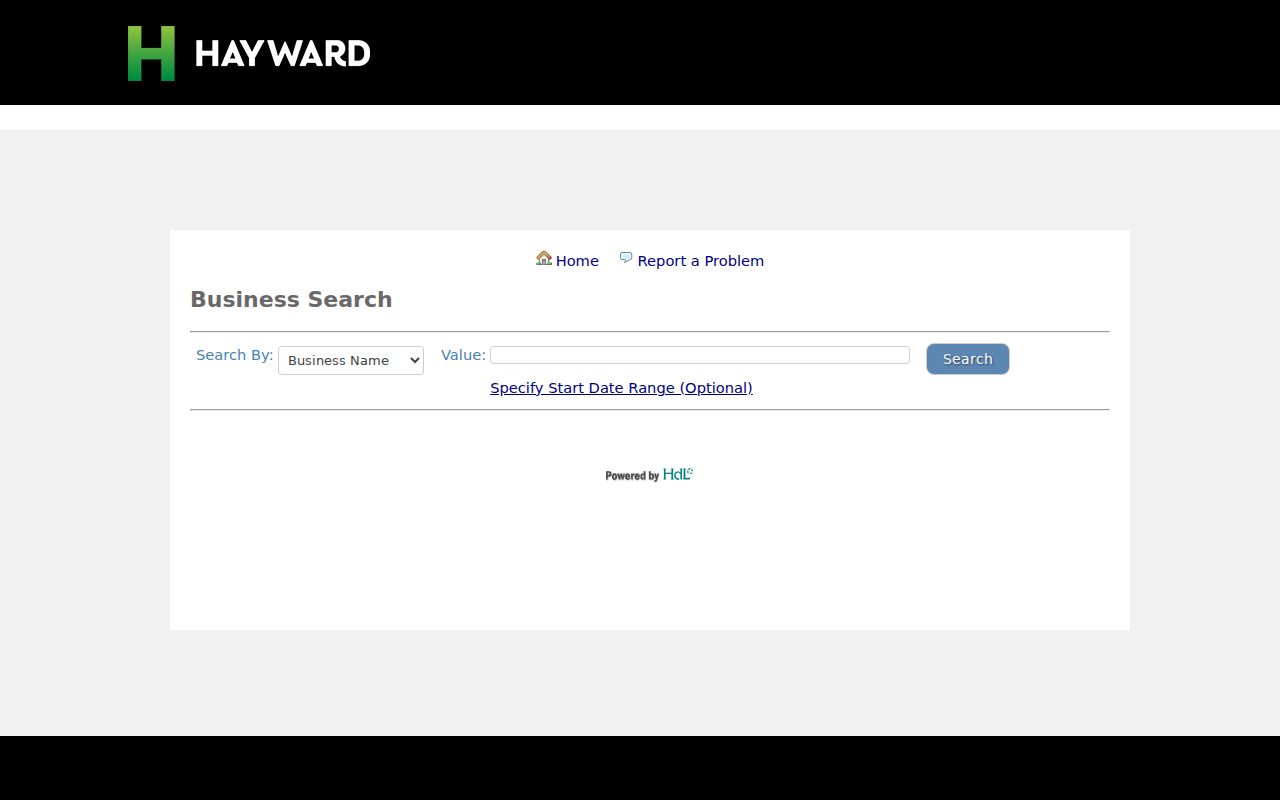
The city database covers current local licenses. State business records can add an entity status, filing number, agent address, managers or officers where reported, and filing history. Alameda County fictitious business name records add sole proprietors and partnerships using trade names; the county says that index covers the last nine years through current filing.
Hayward History Searches Need Microfilm
The most useful insider fact in Alameda County deed research is the 1969 line. A blank web result does not prove that no Hayward record exists. Official real property records begin in 1853, but documents recorded before 1969 must be found through the in-person microfilm indexes. FamilySearch images of Alameda County deed records and indexes may also help, while the Clerk-Recorder counter remains the official route for research and copies.
This split shapes searches for an old home, an estate, or a past Hayward resident. Start with the modern parcel, save its APN and legal description, and work backward through recorded parties. Once the chain crosses 1969, switch tools instead of changing the conclusion. Mail is useful for a known document, but open-ended index research is better suited to the microfilm room or archive help.
Is every old Hayward deed online? No. The online cutoff is about format, not public status. Pre-1969 indexes remain searchable in person, and some historical images are available through genealogy channels. Note: Bring all known surnames, name variants, and a rough year range to make microfilm research faster.
Hayward Directory Searches for Past Residents
For people who lived in Hayward before current portals, local directories may beat a modern database. The Hayward Area Historical Society holds City of Hayward account ledgers and assessment records from 1876 through 1949, Alameda County School Directories from 1916 through 1963, San Lorenzo Pioneer Cemetery records, farm and poultry association files, and more than 20,000 area photographs. School directories can help reconnect classmates or identify staff, while ledgers can tie residents to property and city accounts.
The Hayward Area Historical Society research page outlines these local collections.
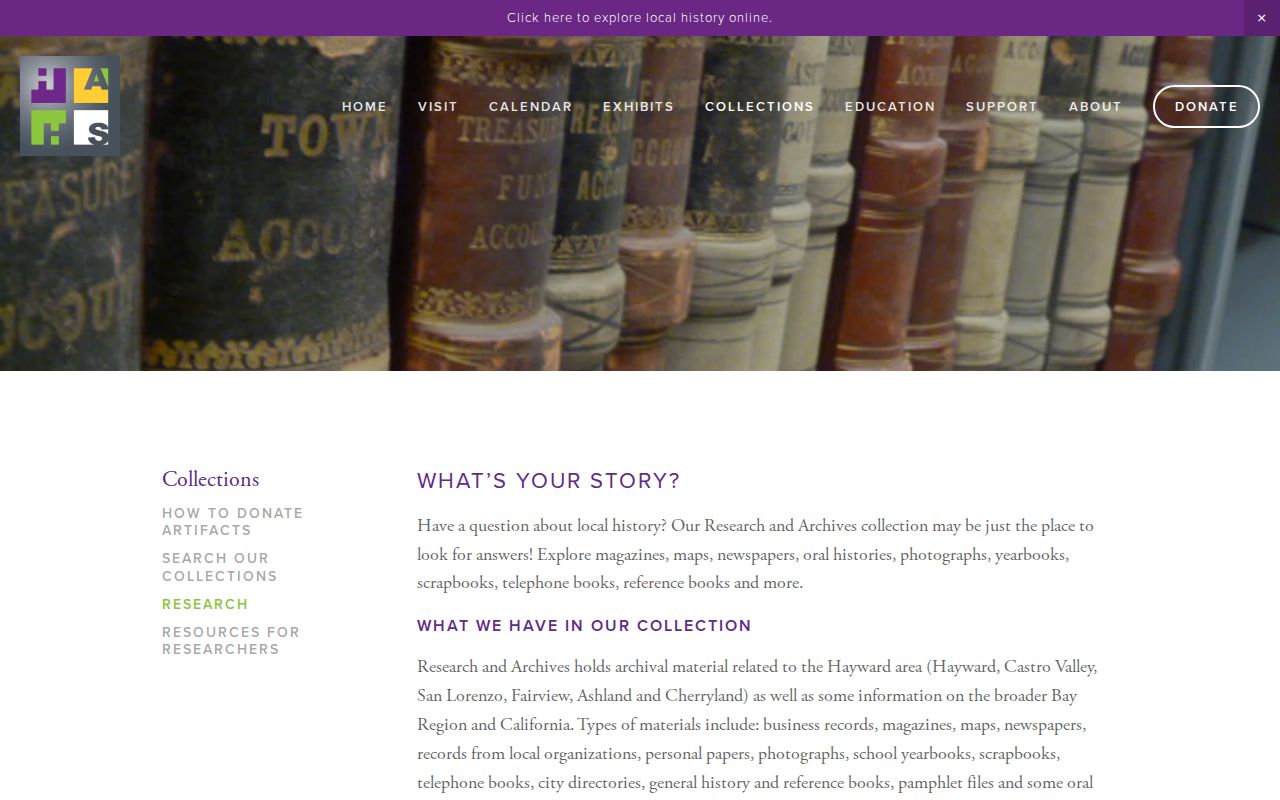
The collection reaches beyond today's city boundary into Russell City, Mt. Eden, San Lorenzo, Ashland, Cherryland, Fairview, and Castro Valley. Regional directory sources also list Hayward city directories for 1962 through 1966. Search a former resident under nearby community names and older forms such as Hayward's, Haywood, and Haywards.
Hayward Custody and Safety Lookups
Current custody searches belong in official systems. The Alameda County Sheriff's Inmate Locator accepts either a Personal File Number, called a PFN, or both first and last name, plus a reCAPTCHA. The result concerns current local custody and may include pending-release information. A pending release can still take hours, and another legal hold may stop it. For state prison custody, California's CIRIS search can show a name, CDCR number, age, current location, commitment counties, admission date, and parole-board dates or outcomes.
California's Megan's Law registry publishes only details that state law permits. Some registrants are not shown, and the registry does not disclose unrelated offenses. These sources answer narrow safety and custody questions. They are not substitutes for court documents, police reports, or direct confirmation from the agency. Hayward Police has a separate GovQA records path, while Alameda Sheriff reports can be requested by email, mail, or fax when release rules permit.
Why Hayward Voter Lists Stay Limited
California voter records are not an open directory for finding anyone. A Hayward voter can use the state status tool to check registration, registered name, and political party. Full voter information is available only for election, scholarly, journalistic, political, or governmental purposes under California law. Confidential voters are excluded, and driver license numbers, Social Security numbers, signatures, and full birth dates are not public fields.
Participation history may show whether a person voted, but never reveals ballot choices. Alameda County Registrar of Voters offers a records form for election material, while the state runs the self-check and voter-file request channels. The full rules and request fields are covered in the Hayward voter registration lookup. Note: Use the self-check for your own status, not as a general name-and-address search.
Hayward Search Privacy Protections
A missing address can be a legal safeguard, not a bad index. California Safe at Home provides a substitute mailing address and mail forwarding for people whose safety requires confidentiality. Protected voter records, sealed cases, juvenile files, adoption records, confidential marriages, and redacted identifiers follow their own access rules. Respect those limits and do not try to rebuild information that an agency has lawfully withheld.
California also gives consumers a statewide route for deletion requests to registered data brokers. The DROP system became available in 2026, and brokers must begin processing those requests on August 1, 2026, subject to legal exceptions. Official custodian records are different from commercial compiled profiles. Official systems tend to show a narrow filing or event, while compiled services may merge marketing data and old addresses that are stale or attached to a person with a similar name.
| Source type | Strength | Limit |
|---|---|---|
| Official record | Direct link to a filing, parcel, case, or license | May omit confidential details or require an offline request |
| Commercial compilation | Fast cross-source hints | May be stale, mixed, or incomplete |
| Archive or directory | Strong historical and community context | Coverage varies by year and place name |
Russell City Changes Hayward Searches
Place names are part of a Hayward people search. Russell City was annexed into Hayward in 1964, which means an earlier person, parcel, or group may appear in county or community-history records instead of City of Hayward files. Eden Township creates a similar issue for older sources. Mt. Eden, San Lorenzo, Fairview, Cherryland, Ashland, Castro Valley, Haywards, Haywood, and Hayward's are all useful search variants when family memory and an index do not agree.
The timing makes the Russell City case especially important. A 1960s property search can cross both the 1964 annexation and the recorder's 1969 online cutoff. Search under the old place name first, identify the parcel or parties, and be ready to use county microfilm. The historical society's ledgers, school lists, organization records, cemetery material, and photographs can bridge names that modern city databases miss. That mix of geography and format often explains a dead end better than a new spelling of the person's surname.